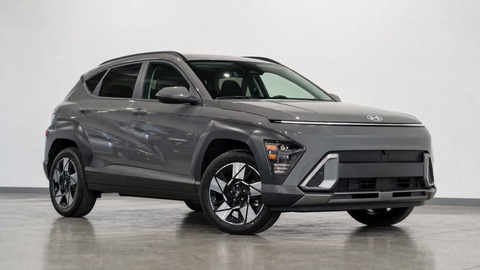
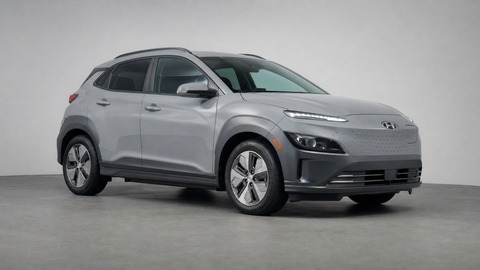
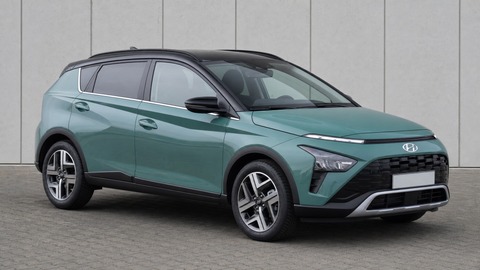
Hyundai Kona 1.0 T-GDI
2017-2023 (OS)Last updated: March 2026
2017-2023 (OS) · 1.0 T-GDI (120 hp) 3-cylinder turbocharged petrol
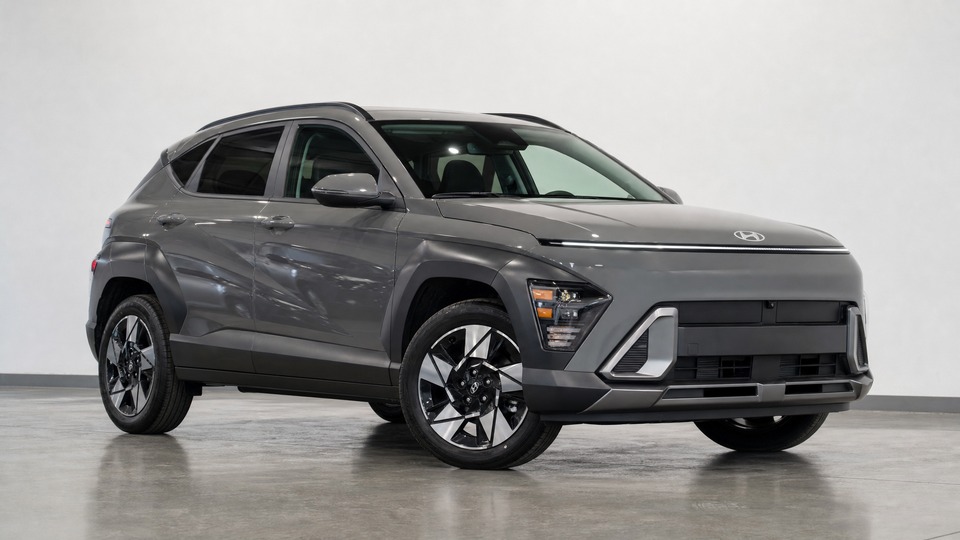
Compact crossover that brought Hyundai into the small SUV segment in 2017. The 1.0 T-GDI three-cylinder is reasonably efficient and paired exclusively with a 6-speed manual gearbox, which avoids the dual-clutch transmission issues found on the 1.6 variant. The Kappa G3LC engine has known timing chain and wastegate concerns that are well-documented and were partially addressed in a 2020 revision.
5-year factory warranty
Manual gearbox avoids DCT issues
Timing chain tensioner wear
Three-cylinder vibration and noise
Buy if: You want an affordable small SUV with a long warranty and are comfortable with a manual gearbox.
Avoid if: You hear any cold start rattle during the test drive or the car has incomplete service history with infrequent oil changes.
Expected Annual Maintenance Costs
Known Issues most common first
Chain stretches and can grind against timing cover, producing cold start rattle and metal particles in oil · more· less
The G3LC 1.0 T-GDI engine has a documented issue where the timing chain tensioner loses hydraulic pressure overnight, causing a metallic rattle for 1-30 seconds on cold starts. On pre-2020 engines, the timing chain can also physically rub against the timing chain cover, grinding off metal particles that contaminate the oil system. Hyundai revised the tensioner, guides, and recommended oil specification in 2020, significantly reducing the problem on facelift models. If you hear persistent rattling beyond 5 seconds on cold start, the chain, tensioner, guides, and often the cover all need replacing. Parts cost approximately 200-400 euros, with labor at 4-6 hours making the total 800-1,500 euros at an independent shop and up to 2,200 euros at a dealer. Ignoring this leads to chain skip and catastrophic valve-piston contact.
Wastegate actuator rod develops play, causing rattle under acceleration and potential limp mode · more· less
The turbo wastegate actuator rod develops excessive play over time, creating an annoying rattle especially noticeable under light acceleration. This is often confused with the timing chain rattle but occurs while driving rather than at cold start. A Hyundai TSB exists for wastegate inspection and adjustment. A DIY fix involves adding a spring or washer to take up the slack in the rod, or adjusting the rod length by turning the lock nut. If the actuator itself fails, the turbo may not boost correctly, triggering limp mode with an EPC warning light. Wastegate adjustment at a shop costs around 150-300 euros. If the turbo internals are damaged, a refurbished turbocharger costs 400-600 euros for parts, with total replacement running 1,000-1,500 euros installed.
Coils fail prematurely causing misfires, rough running, and check engine light · more· less
The 1.0 T-GDI uses three ignition coils that have shown a pattern of premature failure, sometimes as early as 25,000-40,000 km. Symptoms include misfires (P0300/P0301-P0303 codes), rough idle, and loss of power. Damp conditions seem to accelerate failures. A single coil costs approximately 30-50 euros, with labor minimal due to easy access on this engine. However, when one coil fails early, the remaining coils often follow within months, so replacing all three at once is recommended. Total cost for all three coils with spark plugs runs 150-300 euros at an independent shop or up to 500 euros at a dealer.
Sudden power loss while driving, engine enters limp mode restricting revs and speed · more· less
Some owners report sudden power drops from highway speeds, with the car restricting itself to around 65 km/h. The issue is intermittent and often resolves after stopping the engine for a few minutes and restarting. Dealers have struggled to diagnose this because fault codes sometimes clear themselves. Causes vary: wastegate out of specification, software glitch, or boost control valve malfunction. Hyundai has issued software updates that help in some cases. When the root cause is the wastegate, adjustment or replacement resolves it (150-1,500 euros depending on severity). When software-related, an ECU update at the dealer is typically free or around 100-200 euros.
Battery discharges within days when car is parked, especially on 2018-2019 models · more· less
Early Kona models (2018-2019) suffered from excessive parasitic drain on the 12V battery, with the car sometimes failing to start after just 3-5 days of sitting unused. The OEM battery is a relatively small DIN44 unit with limited reserve capacity. Hyundai addressed this with a 2019 software update that periodically checks battery voltage and charges as necessary. On pre-update cars, the Blue Link connectivity module was identified as a major culprit. Battery replacement costs 150-250 euros. If the issue persists after a software update, further diagnosis of parasitic draw may be needed at 100-200 euros.
AC gradually loses cooling effectiveness, often between 25,000-60,000 km · more· less
The Kona uses R1234yf refrigerant which is more environmentally friendly but significantly more expensive to service than older R134a systems. Reports of gradually declining AC performance are moderately common, typically appearing between 25,000 and 60,000 km. Causes range from minor refrigerant leaks at joints to compressor seal degradation. A simple regas costs 150-250 euros due to the expensive refrigerant. If the compressor has failed, replacement including the mandatory receiver dryer and orifice tube runs 600-1,200 euros. Hyundai's use of R1234yf means many independent garages cannot service the AC system, forcing owners to use dealers at higher rates.
Touchscreen becomes unresponsive, Bluetooth drops, reversing camera shows distorted images or fails · more· less
The infotainment system runs an Android-based operating system that can become sluggish or freeze, requiring a pinhole reset (located near the TUNE knob). Bluetooth connections regularly disconnect. The reversing camera may show distorted images or fail entirely due to connector corrosion or camera module failure. Software updates from Hyundai resolve some freezing issues. Camera module replacement costs 200-400 euros including labor. Complete head unit replacement, if needed, runs 500-800 euros.
Generally reliable but timing chain needs monitoring
The Kona 1.0 T-GDI is a straightforward car with the manual gearbox being inherently reliable. The main concern is the G3LC engine's timing chain and wastegate, both of which were improved in the 2020 facelift. Pre-facelift models (2017-2020) require more careful inspection. With proper maintenance and timely oil changes, the engine can exceed 200,000 km. Hyundai's 5-year warranty provides good coverage for newer examples.
Pre-Purchase Inspection Checklist
-
Service history
Complete Hyundai dealer or specialist records. Verify oil was changed at least annually or every 15,000 km.
-
Tires
Check tread depth, age (date codes), and uneven wear patterns. Standard size is 205/60 R16.
-
Cold start
Must start the engine completely cold. Listen carefully for any rattling or metallic sounds in the first 30 seconds.
-
Test drive
Minimum 20 minutes including varied speeds. Watch for warning lights and listen for unusual noises under acceleration.
-
Cold start timing chain rattle
The single most important check. Start the engine after it has sat overnight. Any metallic rattle lasting more than 2-3 seconds indicates timing chain tensioner wear. Walk away if rattle persists beyond 5 seconds.
-
Wastegate rattle under light acceleration
Drive at low speed and accelerate gently in 3rd gear around 2,000 rpm. A distinct metallic ticking from the turbo area indicates wastegate play. Less serious than timing chain but still needs addressing.
-
Check for limp mode during spirited driving
Accelerate firmly through the rev range several times. If the engine suddenly loses power and restricts revs, turbo control or software issues are present.
Recalls and Technical Service Bulletins
Fuel filter paper degradation damaging high-pressure pump (2018-2021 production, recall 21D091)
Verify completed
Brake booster malfunction and interrupted oil supply causing engine damage (2018-2020)
Verify completed
Rear seat belt buckles failing to lock properly (2022-2023 facelift)
Verify completed
Airbag control unit software - airbags may not deploy correctly (select production dates)
Verify completed
Contact a Hyundai dealer with the VIN to verify all recalls have been completed. The fuel filter recall (21D091) is particularly important as degraded filter paper can cause catastrophic high-pressure pump and engine damage.
Warranty Status
Factory warranty (5 years / unlimited km)
May still apply on 2021-2023 models
Rust perforation warranty (12 years)
Active on all Kona OS models
Extended warranty
Available through Hyundai dealers
Hyundai offers one of the longest factory warranties in the EU at 5 years with unlimited km. Cars built 2021 or later may still have remaining factory warranty. Verify remaining coverage with a Hyundai dealer using the VIN.
This report is for informational purposes only and does not constitute professional advice. Estimates may be inaccurate. Always have a qualified specialist inspect the vehicle before purchase. We accept no liability for decisions made based on this information.